When an Ad Campaign Doesn’t Work: What We Got Wrong and What We’d Do Differently
Quick Takeaways
- The ads didn’t fail because of targeting or spend — they failed because of trust barriers.
- A weak online reputation and a non-conversion-focused website held back results.
- Today’s buyers research more than ever, and negative news can stop conversions instantly.
- We now vet online presence and trust factors before launching any paid campaign.
On This Page
If you’ve ever spent money on marketing that didn’t deliver, you know the feeling. You start to wonder where the money went, whether anyone was really paying attention, and if marketing even works for a business like yours. We’ve been there too.
As a team, we’ve had to face tough lessons about what it takes to build trust and get real results. One campaign in particular reminded us that good marketing isn’t just about clicks and impressions. It’s about people, timing, and trust. Here’s that story.
We were hired to help a personal trainer get more clients. He offered private gym sessions. We suggested running Google Local Services Ads to reach people looking for private training in his area. He invested around $2,500 in the campaign. We expected the ads to generate leads like they had for other clients. But they didn’t.
What Happened
People engaged with the ads, but they didn’t convert into phone calls or bookings. The campaign was paused and restarted a few times, which disrupted momentum and made it harder to build traction. From the beginning, we knew the client’s website might hold back results. It wasn’t built to convert, but we moved forward anyway, hoping we could make up the difference with strong ad performance.
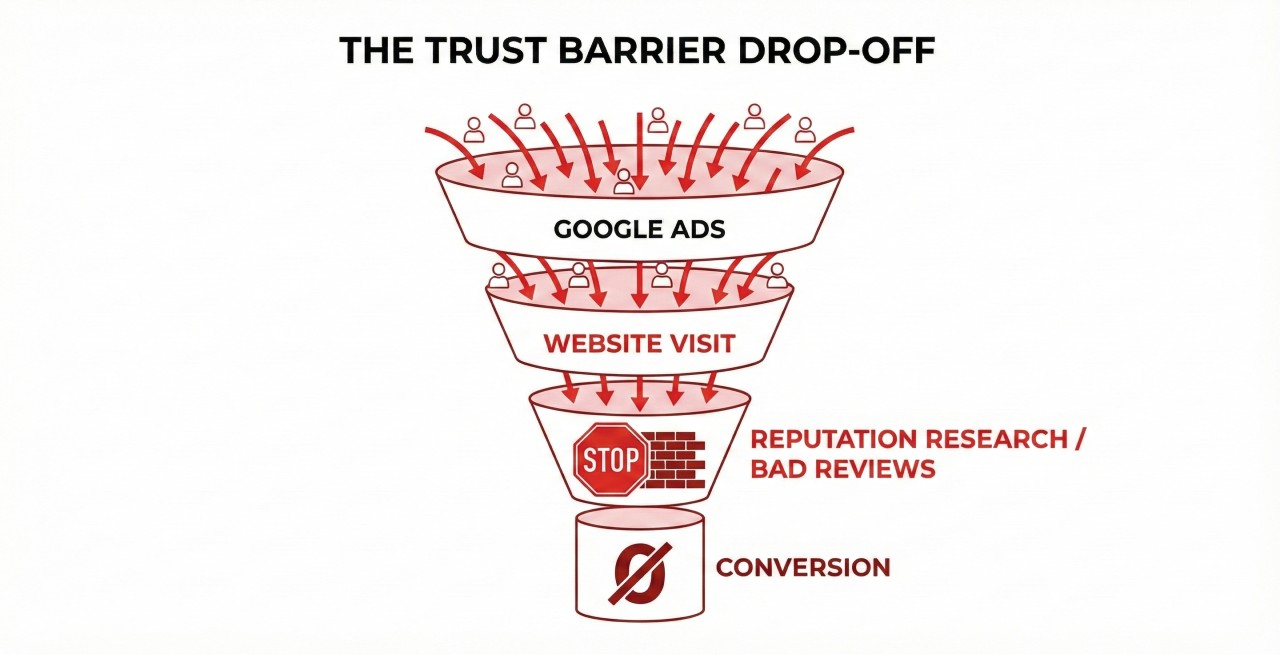 We also knew about the old news articles online about the client’s past. We believed enough time had passed and that people would see him for who he was today. What we underestimated was how much research potential customers now do on their own. Today’s buyers are smarter, more cautious, and more skeptical than ever. In this case, many people likely searched his name and stopped before reaching out. That’s on us. We should have paused to address those underlying barriers before spending on ads.
The client later posted a public review saying that we strung him along and failed to deliver. While we stand by our efforts and the time spent trying to make the campaign work, we also take responsibility for moving forward without fully accounting for how his public image might affect results. Some of the claims made in the review don’t reflect what actually happened, but we understand the frustration that comes when results don’t meet expectations.
What We Should Have Done
Instead of jumping into ads, we should have started by helping the client improve his online reputation. That could have included writing positive stories, publishing reviews from happy clients, and helping new content show up first when people searched his name. In other words, we needed to build trust before trying to drive new business.
We also should have emphasized even more strongly how much his online presence and website experience mattered. Ads can bring in clicks, but if people lose trust or can’t navigate the site effectively, those clicks don’t lead to results.
What We Learned
- If a business owner has negative news online, ads are not the first move. The first step is building a better online presence.
- People are more informed than ever. Many do research before making decisions, especially when it involves personal services. We underestimated how much that research would impact this campaign.
- Having a website that doesn’t support conversions will hold back any paid campaign. We flagged this early but still moved forward.
- Not all problems can be solved with ads. Sometimes the real problem is deeper.
Moving Forward
 We now take extra time to research how our clients look online before running campaigns. If there are red flags, we talk about them and come up with a plan. We would rather delay a campaign than waste someone’s money on something that isn’t going to work.
This doesn’t mean we avoid bold campaigns. It just means we time them better and make sure the trust is in place first.
We’re not proud that this campaign failed. But we are proud to be open about it. We hope this helps other business owners understand the value of timing, trust, and being realistic about what marketing can and cannot do.
Turning Lessons Into Wins
Marketing can be frustrating, but it doesn’t have to stay that way. What matters most is what you learn and how you apply it next time.
We’ve turned lessons like this into better systems, better conversations, and better results for our clients. If you’ve ever run a campaign that didn’t perform or you’re unsure what’s holding you back, we can help.
Let’s talk about your goals and build a plan that works for where your business is today and where you want it to go.